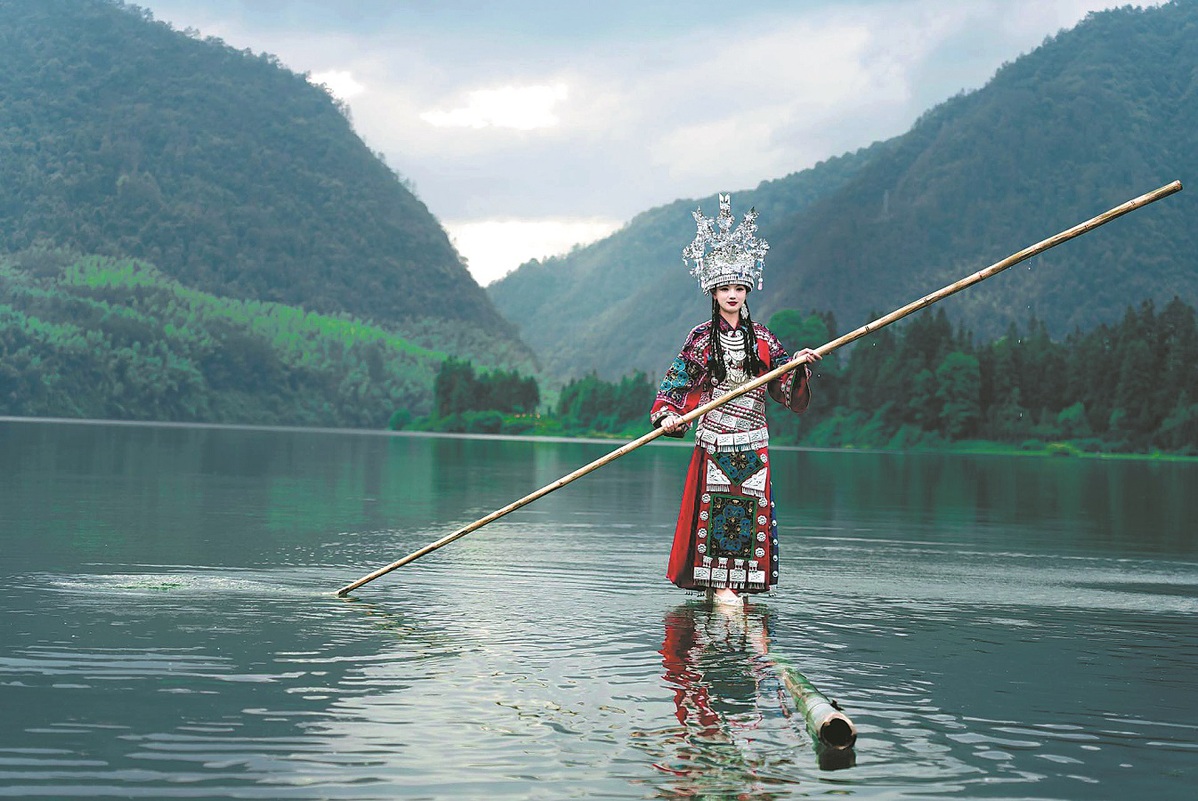
Single Bamboo Drifting
Overview
Single bamboo drifting is a traditional sport and cultural practice that originated in northern Guizhou province, China. Recognized as a national intangible cultural heritage, the sport involves balancing on a single bamboo stem, while performing various movements. This unique and captivating activity has become increasingly popular among young people and is performed both as a competitive sport and a cultural exhibition.
Historical Background
Single bamboo drifting traces its origins back to ancient China, where it was a practical method of transportation in regions abundant with bamboo, particularly the Chishui River area in Guizhou. Historically, locals used bamboo to transport goods by river, lashing bamboo stems together to create rafts. However, these rafts often broke apart, requiring individuals to balance on single stems of bamboo and guide them down the river, a practice that eventually evolved into a sport.
During significant dynasties such as the Qin (221-206 BC) and Qing (1644-1911), bamboo drifting gained prominence, first using timber like the prized nanmu wood and later transitioning to bamboo due to its abundance and affordability. This transition catalyzed the development of bamboo drifting games, which became a part of regional festivities and cultural traditions.
Cultural Significance
Today, single bamboo drifting is celebrated as a vital component of the cultural heritage in Guizhou and beyond. It is a testament to the innovative spirit of the local communities and their ability to adapt natural resources for both practical and entertainment purposes. The sport is performed in traditional costumes, often accompanied by music played on traditional instruments like the lusheng, enhancing its cultural richness.
As a national intangible cultural heritage, single bamboo drifting is showcased in various cultural events and festivals, including the National Traditional Games of Ethnic Minorities, which highlight traditional sports from China's diverse ethnic groups. These performances serve to preserve and promote the cultural heritage of the Miao and other ethnic communities in the region.
Modern Revival and Popularity
In recent years, efforts to revitalize and promote single bamboo drifting have led to its increasing popularity among younger generations. Local authorities and cultural practitioners have established training programs and teams dedicated to preserving the tradition. These programs not only teach the technical skills required for bamboo drifting but also instill an appreciation for the cultural heritage it represents.
The sport has gained international attention through viral videos and social media platforms, showcasing the impressive balance feats and artistic performances of bamboo drifters. This exposure has sparked curiosity and admiration globally, further cementing single bamboo drifting as both a cultural and athletic spectacle.
Technique and Training
Mastering single bamboo drifting requires significant skill, balance, and endurance. Practitioners must learn to navigate the varying curvatures and buoyancy of individual bamboo stems. Training involves extensive practice in rivers, where drifters perfect movements such as forward and backward strokes, turning, and balancing with additional bamboo poles.
Training regimens are often rigorous, with practitioners spending hours on the water to hone their skills. The sport emphasizes the importance of perseverance and passion, as developing proficiency in drifting can take years of dedicated practice. Veteran practitioners, like Peng Gang, play a crucial role in training new generations, ensuring the tradition is passed on through structured teaching and mentorship.
Economic and Environmental Impact
The practice of single bamboo drifting is intertwined with the local bamboo industry, which significantly contributes to the economy of regions like Chishui. The bamboo forest landscape not only supports the cultural practice but also drives economic development through industries such as bamboo weaving, crafting, and the production of bamboo-based goods.
Efforts to sustainably harvest and utilize bamboo reflect the community's commitment to preserving the ecological balance of the bamboo forests. Initiatives to replace plastic with bamboo products highlight bamboo's potential as an eco-friendly alternative, further supporting the economic vitality and environmental sustainability of the region. Article reference1. Chishui's bamboo industry shoots to new heights. chinaservicesinfo.com. 20242. Going with the flow. chinadaily.com.cn. 20243. Video: Balancing on a bamboo pole. chinadaily.com.cn. 20224. Guizhou art of bamboo drifting causes stir online. chinadaily.com.cn. 2018Photo Gallery(5 pictures)CategoriesCultural HeritageTagIntangible Cultural HeritageTraditional SportsLocal CultureCatalogue1. Overview2. Historical Background3. Cultural Significance4. Modern Revival and Popularity5. Technique and Training6. Economic and Environmental Impact- - - []








